Last Updated October 15, 2026
In brief:
-
A new fixed indexed annuity (FIA) takes 12 to 18 months to reach one distribution channel. Every additional channel adds months.
-
Most of that time is spent recoding the actuary's pricing logic, first for the calculation build and then again for illustrations, admin systems and TPAs.
-
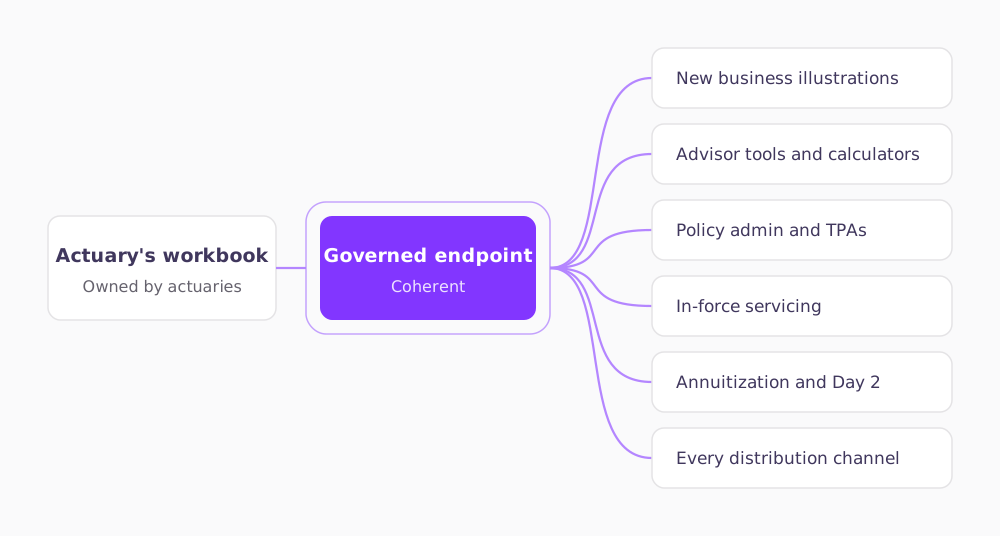
Coherent runs the actuary's workbook as the production calculation, so filing, illustrations, admin integration and distribution can all start from one governed endpoint.
-
A new crediting strategy or distributor variant then becomes a workbook change the actuaries make themselves, with no new IT project behind it.
Say a large IMO wants your FIA with monthly averaging on a different index, and its advisors want a commission layer of their own. The good news is your actuaries can price that variant in a week. Getting it to market? That will probably take another year.
Little of that year-long timeline goes to product design. In our experience, once the actuary finishes building the model, the pricing workbook is handed to IT, a third-party administrator (TPA) and an illustration vendor, and each of them rebuilds the logic to fit its own system. This is how a single FIA's logic ends up coded in half a dozen places.
Annuity launches are slow because the math gets built more than once.
With Coherent, the actuary's workbook becomes the production calculation. Every downstream system calls the same governed logic and the translating stops.
From there, the launch calendar starts to look very different.
Why does it take 12 to 18 months to launch an FIA?
Five stages often run in sequence, and two of them rebuild the same logic.
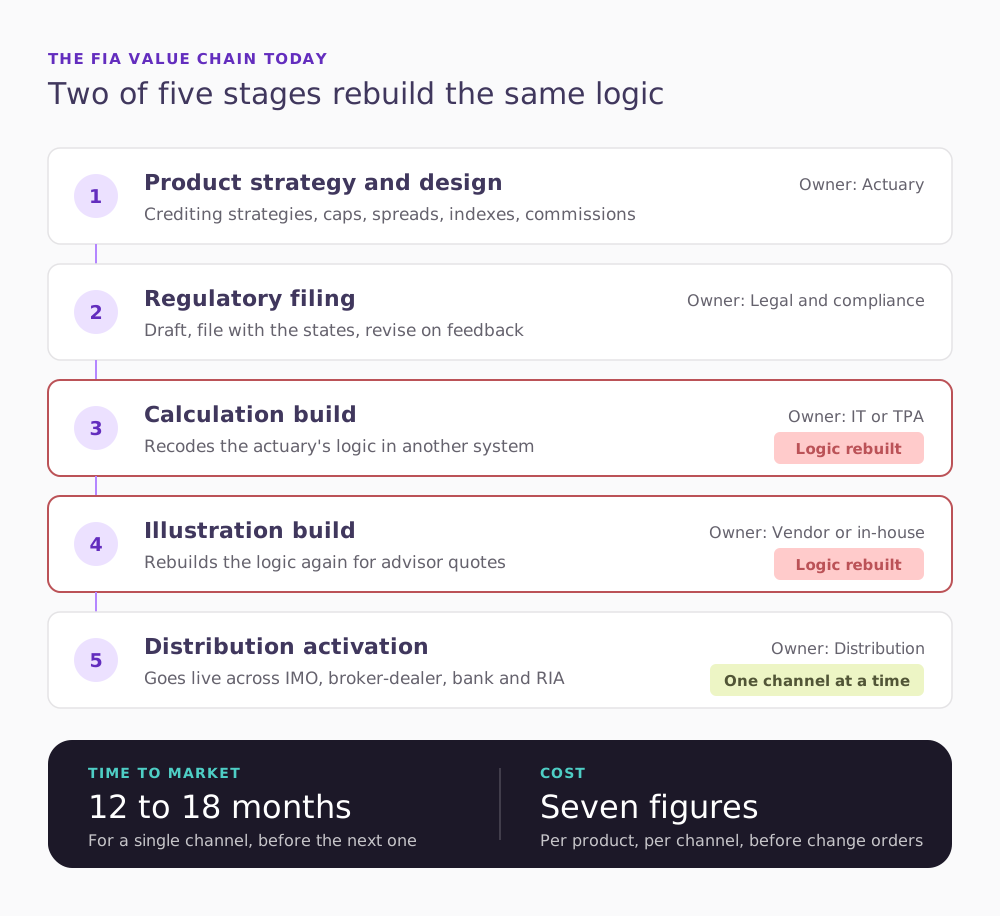
Actuaries design the product in Excel, setting the crediting strategies, caps, spreads, index options and commissions. From that design, legal and compliance draft the regulatory filing and work it through the states.
Once the workbook leaves the actuarial team, the rebuilding starts. IT or a TPA recodes the logic in another system, working from the spreadsheet and a product specification that can run to 30 pages. The illustration team, whether in-house or at a vendor, rebuilds it again for the quotes advisors show clients. Distribution activation waits on both, then rolls out one IMO, broker-dealer, bank or RIA at a time.
Because each stage waits on the one before it, a single-channel launch stretches to 12 to 18 months and a seven-figure cost per product, per channel. That's before change orders.
Change orders are where the calendar really slips. A distributor variant, an extra commission layer or a new index sends the work straight back to the calculation build, and a variant can take another year to reach market. Each round of downstream changes can cost the carrier millions, paid out in internal IT work, TPA change orders and illustration vendor fees.
Volatile interest rates make all of this harder. Caps and crediting rates have to follow the rate environment, so carriers reprice and relaunch products far more often than they used to, and each relaunch runs through the same slow chain. Private equity adds pressure of its own, pushing annuity carriers to launch more products, more often, in the race for retirement assets. Carriers that need 18 months per launch are now competing against the ones that don't.
The actuary's workbook becomes the production calculation
Instead of serving as a specification for someone else to code, the actuary's workbook becomes the calculation itself, and Coherent runs it.
Take an FIA illustration workbook. It already takes policyholder details and feature selections as inputs and projects account value and index credits year by year. What it lacks is a way for production systems to call it, at scale and under the controls IT expects. Coherent adds that layer without anyone leaving Excel, and publishes the workbook as a governed API endpoint in minutes, with the actuarial logic unchanged. From there, integration teams build against a documented endpoint instead of reverse-engineering a spreadsheet.
With the endpoint live, there's nothing left for the development team to translate. The second rebuild for illustrations disappears too. Any surface can call the same endpoint, whether it's an advisor portal, a branded PDF generator, a vendor front end or the carrier's existing illustration system. Each illustration then runs the pricing model itself, so advisor quotes match the model by design.
A carrier building its own front end takes the API and goes. For a managed, end-to-end illustration platform, Coherent's partnership with Illustrata puts Coherent underneath as the engine, while the front-end provider handles disclosures and state requirements. Either way, actuaries keep control of the illustration logic they designed.

A new crediting strategy is a workbook change
One fast launch is a good start. What carriers really need is the tenth launch moving as fast as the first, and that comes down to modular design. Actuaries build the logic as a base contract engine with feature modules around it, and Coherent runs them as connected models that call one another.
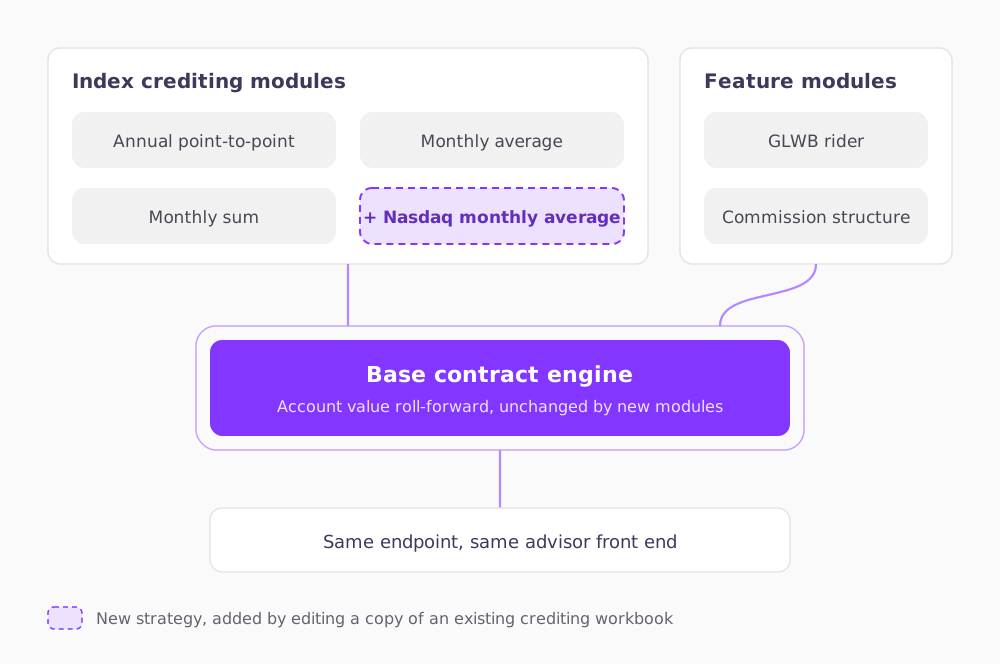
The base engine does one job, rolling the account value forward. Everything a distributor might want to change sits around it as its own module, from index crediting strategies to guaranteed lifetime withdrawal benefit (GLWB) riders and commission structures.
Now go back to that IMO request. Run it through this structure and most of the year disappears. The actuary copies an existing crediting workbook, adapts it for monthly averaging on the new index and connects it to the base engine, which doesn't change at all. The new strategy shows up in the front end advisors already use, and the illustration engine is ready within days.
Because every module lives in one environment, each launch also adds to a shared library of features the next product can draw on. We've seen the same architecture power a fully customizable life product with real-time pricing.
If this sounds familiar, it's because annuity carriers have chased the idea before.
The customizable annuity chassis prices and files each feature independently, so distributors can assemble products like building blocks. It works commercially, but it can take two years to stand up. Then the market asks for an index strategy that isn't in the filed inventory, and the long wait is back. Modular calculation keeps what made the chassis work and drops the rebuild every time the inventory grows.
There's an upside for distributors, too. Imagine one spots interest in a particular index among clients in their early 50s. Working with the carrier's actuaries, it can show those clients illustrated historical returns before anyone commits to a build. If clients respond, the carrier builds the product. If they don't, nobody spent a year finding out.
The filing draft starts the same day
In most launches, regulatory filing waits for the product to settle and then starts from a blank template. That pushes the drafting late into the cycle, right when everything else is waiting on it.
Coherent lets the filing draft start on day one. It reads the workbook that defines a new crediting strategy, pulls the values the filing needs and applies the carrier's own filing template. What comes back is a near-complete draft covering purpose and scope, the index scenarios and the illustrated returns. A traceability section links every figure back to its source in the workbook.
Actuaries still review the draft, and compliance review and sign-off stay with the carrier. The difference is that review now starts alongside the build, from a draft reviewers can check number by number.
Beyond launch day, the same endpoint keeps paying back
Launch day gets the attention, but most of the long-run savings show up afterward, once every downstream process calls the same governed logic.
Policy admin calculations
Anyone who has reconciled a TPA's numbers against the actuary's will know this one. When a TPA rebuilds the math from scratch, the two rarely match, and every mismatch restarts the hunt for a bug. Coherent gives admin systems and TPAs one endpoint to call instead, so there's only one calculation to match. Actuaries keep ownership of the logic and IT governs the endpoint, which keeps admin system calculations consistent across every system that runs them.
Audit evidence
Logic coded into a legacy admin system tends to drift out of view over the years. To prove it still holds, carriers end up replicating calculations on batches of policies for the audit team. Once the admin system calls the actuary's own workbook logic, much of that replication work falls away.
In-force servicing
The GLWB rider your actuaries designed for new business illustrations doesn't need a second build for servicing. The same logic can drive in-force illustrations and year-end statements that show how a guaranteed benefit base has grown, with no separate legacy platform to maintain.
Annuitization and other Day 2 items
Ask any product or IT team about Day 2 and you'll hear about everything cut from launch scope when the date or the budget ran out. Annuitization and payout calculations are the classic case, and they often live on an actuary's desktop. With the logic already behind the API, they can run at scale from the same workbook, so the effort spent at launch gets reused instead of repeated.
A lightweight model for new entrants
For new annuity entrants, the same endpoint can go even further. A carrier with a small book can layer decrements and reserving onto the illustration cash flows and run a lightweight model for the launch phase, before committing to a full actuarial modeling platform. That matters because not every launch takes off, and some products go to market and sell only a hundred policies.
What this means for annuity product teams
Today's FIA calendar runs in a line, and every change sends the work back toward the start. With Coherent, that line becomes parallel tracks from day one. Filing drafts start alongside the build. Illustrations, admin integration and distribution all call the same endpoint, and new variants arrive as workbook changes owned by the actuaries who designed the product.
In practice, FIA in a day means the pricing logic goes live within a day. The product then reaches market in a fraction of the old timeline, as filing approval and distribution onboarding allow. One annuity carrier working this way cut the build time for its advisor-ready annuity tools from six months to six weeks.
The same approach works beyond FIAs, too. It applies just as well to other annuities, life insurance and supplemental products such as hospital indemnity.
Frequently asked questions
How long does it take to launch a fixed indexed annuity?
Traditionally, 12 to 18 months for a single distribution channel, with months added for each additional channel. When the actuary's workbook runs as the production calculation, the pricing logic can go live within a day. Market launch still depends on filing approval and distribution onboarding, but Coherent customers have moved illustration timelines from months to weeks.
Do we have to replace our illustration system?
No. Coherent serves the calculation, and any front end can call it, including an existing illustration system, an advisor portal or a vendor platform. Carriers that want a managed, end-to-end illustration platform can use a partner-delivered front end with Coherent as the engine underneath.
Why not use AI to convert the Excel logic to code?
AI can speed up a one-time conversion. The harder question is what happens after cutover, when someone has to maintain that code through every rate change and new product, usually outside the actuarial team. Coherent keeps the logic in the workbook actuaries already maintain, while production stays governed. AI works best alongside Excel, not as its replacement.
Who handles illustration compliance and regulatory filings?
The carrier, or the illustration front-end provider it works with. Coherent supplies the calculation and drafts filing documents that trace every figure to its source in the workbook. State requirements, disclosures, compliance review and sign-off stay with the carrier.
Does this replace our actuarial modeling system?
No. Coherent runs alongside actuarial modeling platforms such as Prophet, AXIS and ALFA without a rip-and-replace migration. Carriers keep their existing models where they are and use Coherent for new products, illustrations and the calculations downstream systems need to call.
How does IT govern changes to the endpoint?
Every model published to Coherent carries Git-style version control with formula-level history and automated regression testing. Actuaries make changes in the workbook, and each change is versioned and tested before it reaches production. IT gets a production asset it can govern, monitor and integrate, and every result traces back to the logic that produced it.